20 New Pieces Of Advice For Picking Floor Installation
Wiki Article
The Best Flooring Types To Suit Philadelphia's Climate And Humidity
Philadelphia isn't often mentioned enough as a genuinely challenging place to build flooring. It's located in a region that experiences real winters dry cold, cold air that expands the wood, as well as humid summers that push moisture into every aspect of the. Then, add the fact that a vast majority of the residential material is dated, and frequently not having a consistent climate control for every room, and you've got conditions that expose the flaws of any flooring material which isn't well matched to the environment. What works to work in Phoenix or Seattle isn't going to work in Philadelphia. This guide breaks down how each major flooring type actually performs in Philadelphia homes through the four seasons.
1. Solid Hardwood Will Not Be Rejected for the Climate
Solid hardwood is not an inexpensive option in Philadelphia. It's an excellent choice if installed appropriately, properly acclimated and kept in a house with a consistent humidity -- ideally between 35 and 55 per cent all year. When those conditions aren't met then you'll see gaps that are seasonal throughout winter and an occasional cupping summer. Older homes without central air or even a consistent distribution of heat is the most risky place to install solid hardwood. This doesn't mean it's the bad choice, but this implies that proper installation as well as ongoing humidification a must.
2. Engineered Wood was Designed for This Climate
The cross-ply layered construction of engineered hardwood wards off the movement and expansion that cause solid wood pieces to shift in response to seasonal changes. This gives you real hardwood at the frontreal grain, real nature, refinishable in accordance with layers of wear -- with a much higher level of dimensional stability underneath. For Philadelphia homes, particularly in Bucks County and Montgomery County where older construction meets unpredictable basement moisture, engineered timber finds a place that solid wood can't beat in the face of varying conditions.
3. LVP Is the Most Climate-Tolerant option available
Luxury vinyl flooring doesn't absorb moisture, does not expand or contract in dry winter weather, and doesn't really care whether your HVAC is on continuously or not. For Philadelphia homeowners who are dealing with basements, below-grade spaces, or rooms that change dramatically in the changing seasons LVP provides a flooring that is guaranteed to last. LVP flooring that is waterproof has grown to be an increasingly sought-after services offered by flooring contractors throughout Delaware County and South Jersey since homeowners have learned this lesson often following having a water-related issue with a another product.
4. Laminate is the climate weak Connector in the Lineup
Laminate flooring looks like LVP on paper, but it behaves significantly differently in humid environments. It is made of wood fiber that wicks in moisture, expands along the edges, and after the damage has started it's not able to reverse. In a controlled, dry Philadelphia house, it's capable of performing efficiently for years. In a kitchen in a rowhome, a basement, or any room that suffers from high humidity levels, it can pose a risk. Cheap flooring installation quotes often have laminate installed in spaces in which LVP would be the smarter investment.
5. Porcelain Tiles Refuse Philadelphia's humidity
From a point of view of moisture resistance porcelain tile is the absolute standard. It doesn't expand, it doesn't constrict, doesn't hold water, and lasts longer than any other flooring option in areas with high humidity or moisture. It's cold underfoot in winter, difficult on joints, and the grout requires regular maintenance. Installing porcelain tile in Philadelphia bathrooms and kitchens is extremely popular for a reasonit's an ideal equipment for these rooms in this climate.
6. Ceramic Tile Works but Has Porosity Limitations
Ceramic tile is a step above porcelain with regard to density and resistance, but remains superior to any wood-based floor choice for wet zones. For bathroom tile installations and floors for the kitchen in Philadelphia homes, it is an excellent choice, especially when price is a factor since ceramic typically costs less than porcelain square feet. The main difference is that ceramic shouldn't be used in areas with potential exposed to freezing or standing-water -- exterior applications are in which porcelain shines.
7. Wide Plank Hardwood Needs Extra Humidity Management
This is a fact that many homeowners learn too late. Larger planks of wood with a width of five inches or above will move faster with humidity changes as compared to narrow strips of flooring. In Philadelphia's climate that is seasonal, large plank solid hardwood in an environment with no tight humidity control can develop visible gaps in winter. These can be closed back up in the summer. Flooring contractors who work on a regular basis with wide plank flooring are likely to bring up this topic in advance. Whoever doesn't could be getting you ready for the worst winter ever with your new floors.
8. Subfloor Moisture Is a Separate issue from Ambient Humidity
There are two distinct issues each requiring different answers. The humidity of the home affects how wood flooring expands and contracts according to the seasons. Subfloor moisture, vapor expulsion through concrete slabs moving through older subfloors and inadequate ventilation for the crawlspace -- pose a significant danger to adhesive bonds as well as floating flooring stability. A thorough subfloor assessment before the installation of flooring in Philadelphia, Bucks County, or Delaware County homes should include moisture readings and not be limited to a visual inspection.
9. Acceptance Time Is Not a Choice in This Region
Hardwood flooring should be acclimatized to the temperatures and humidity of your home prior to installation- typically, between 3 and 7 days spent in the area. In Philadelphia that is not done or in a hurry, this step is the reason why you end finding floors that change significantly after installation because the wood was not equilibrated to the conditions in your home. The flooring installers licensed by the state schedule installation time to acclimate into their timelines. Companies who are budget-friendly and begin installation the same day the material arrives are creating a rift that will reveal.
10. The Best Climate Option Is Always Site-Specific
It is true that a Montgomery County home with a fully-finished basement, central heating and constant year-round humid control is a vastly distinct environment from a Philadelphia rowhome equipped with radiator heat and no air conditioning and a damp basement below. Flooring that is great in one environment will fail at the opposite. The flooring professionals worth hiring aren't recommending flooring from catalogsthey look at the actual situation of your property and then match the flooring to the climate that the floor will have to endure over the next twenty years. Take a look at the top rated
best flooring contractors Philadelphia for website advice including LVP flooring Philadelphia PA, flooring installation Philadelphia, flooring contractors Bucks County, tile flooring installation Philadelphia, custom hardwood staining Philadelphia, hardwood floor resurfacing Philadelphia, flooring installation Philadelphia, hardwood floor refinishing cost Philadelphia, flooring installers Philadelphia, laminate flooring installation Philadelphia PA and more.
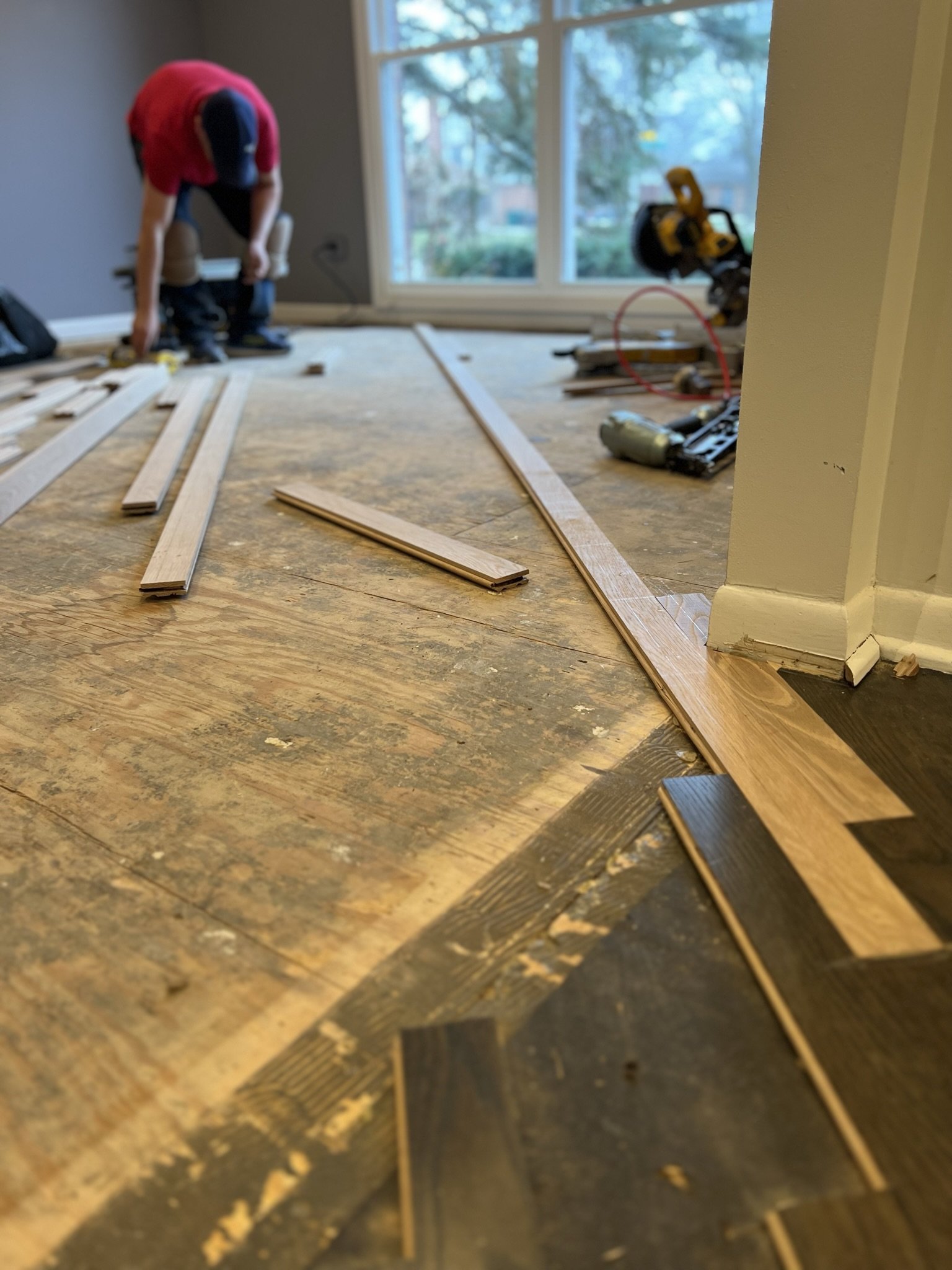
Waterproof Flooring Options For Philadelphia Bathrooms
Bathrooms are the areas where flooring choices offer the smallest margin of error. Each other room in a Philadelphia house can handle any flooring that's not water-resistant while a bathroom will not. Showers that are awash with steam, water around the bases of toilets and splash zones at sinks, and the general humidity that creates in bathrooms will expose every weak point in a flooring material that's not truly waterproof. Philadelphia homes present additional wrinkles in the form of subfloors that are old and may already be carrying moisture bathrooms that haven't even been upgraded since the 1970s and in a lot of rowhomes, bathrooms that are stacked over finished living spaces. A flooring defect could result in an issue with the ceiling downstairs. This is what works, and what doesn't and what questions you need to ask before putting in any bathroom floor. in.
1. Porcelain Tile remains the Benchmark All other Tiles Are Compared
There's an explanation for why porcelain tile has been a popular bathroom flooring for a long time It is impervious to water at the tile's surface. It also withstands humidity and steam without breaking when properly installed and grout sealing it can outlast every other option when it's wet. Tiles made of porcelain in Philadelphia bathrooms is a preferred choice with the longest documented track record. The drawbacks are evidentcold underfoot, hard on joints, maintenance of grout necessary -- but none of the other materials can compete with its performance in waterproofing and durability for a bathroom.
2. Ceramic Tiles are a Legal Step Down, It's Not An Alternative
The terms porcelain and ceramic are frequently mentioned interchangeably, however they're not the same thing in the bathroom. More porous is ceramic than porcelain, which can be a problem in a bathroom where humidity is regular rather than frequently. For a powder area or a guest bathroom with low use ceramic tile flooring is a reasonable and more affordable option. For a primary bathroom in an Philadelphia residence that experiences daily shower usage, the density and moisture resistance of ceramic is well worth the extra cost by square foot. The installation process is similar and the results over time isn't.
3. LVP Is the Most Practical Alternative to Tiles that is waterproof
Luxury vinyl planks have truly gained its place on the table in bathroom flooring discussions. It's 100 percent waterproof -- the core isn't able to absorb water and the surface isn't affected by exposure to moisture and it's warmer and more comfortable underfoot than tiles. The main caveat in installing LVP for bathrooms is that LVP's water-proofing applies to the planks as a whole, in no way to the joints between them. In bathrooms with a lot of water exposure -- for instance, a walk-in shower with no barrier, a freestanding tub in a freestanding tub, etc. -- water could work through planks and reach the subfloor over time. A properly installed installation process and seam sealing is important more than any other room.
4. Laminate in the Bathroom is a choice you'll regret
This must be stated with clarity since laminate does show up among bathroom flooring plans, typically due to its lower price. Laminate has a wood-fiber based core. The continuous bathroom and the wood fiber moisture are not compatible. The edges expand, the joints lift, the layer separates and the damaged areas accelerate in bathrooms more quickly than any other room in the house. Flooring that is cheap and puts laminate in the Philadelphia bathroom isn't an investment, but an expense that will be delayed by the time of. Any flooring company that recommends laminate for a bathroom that is not a main one must be asked directly why.
5. The Subfloor underneath a Philadelphia Bathroom requires a thorough assessment
Older Philadelphia rowhomes and suburban colonials generally have bath subfloors containing the history of moisture -- past leak staining and soft spots that result from decades of water exposure, or even the original wood subfloors which have taken in more water than they could over the course of time. The addition of a new waterproof flooring to the damaged subfloor does not solve what's wrong, it is merely covering it up while it continues to get worse. The repair of subfloors in Philadelphia bathrooms before flooring goes down is not an upsell, but a requirement for a new flooring to be able to perform properly and not be ruined prematurely.
6. Floor Heating Compatibility Varies by Material
Radiant floor heating in bathrooms -- now common in Montgomery County and Delaware County home remodeling -- isn't ideal for every flooring. Porcelain tile can conduct and store heat effectively, making it the perfect flooring option over the subfloor heating system. LVP is compatible with radiant heat, however it has temperature thresholds that need to be respected -- excessive heat could cause problems with dimensional stability. If bathroom floor heating is part of your renovation, the flooring material decision and the heating system's design need to take place in concert with each other, not in isolation.
7. Bathroom Tile Layout Impacts Both Image and Water Management
This is a detail that makes experienced tile flooring installers from those who just know how to install tile. Bathroom floors require a slight slope toward the drain, usually 1/4 inch per ftto stop standing water from getting. Tile layouts that do not account on this factor, and does battle against it by using large-format tiles that span the slope, causes pools of water that eventually make through the subfloor. The layout conversation with your contractor must include the way in which the tile pattern is interacted with the drainage location, not just how it looks on paper.
8. The choice of bathroom grout is a Practical Decision
Standard sanded-grout in bathroom installations requires sealing during installation and repeated sealing throughout its lifetime. Epoxy grout -which is tougher, more expensive, and less forgiving to install -is basically impervious to the effects of staining and water, and doesn't require sealing. It is ideal for Philadelphia shower tile, in which homeowners want minimal maintenance epoxy grout is worth paying for the additional labor expense. If you're a homeowner who is committed to regular maintenance of their grouts, standard grout, sealed effectively. What's not performing is standard grout that never gets sealed in bathrooms with high moisture location.
9. Small Format Tile Managing Bathroom Floors Slopes Better
The current trend of large-format tiles, such as 24x24 and larger that performs well in kitchens and living areas has practical limitations in bathrooms. Larger tiles are more difficult pitch toward drains without creating noticeable unevenness. They also require flat subfloors to prevent lippage. Tiles with smaller sizes (12x12 and lower and specifically mosaic tiles have the ability to follow the contours of the bathroom floor more naturally, control the drain slope more gracefully and also provide greater grout lines, which increase slip resistance in wet conditions. Philadelphia tile flooring professionals with years of experience in bathrooms will speak to this issue prior to making any layout decisions.
10. Bathroom Flooring and Wall Tile Should be specified together
A mistake that leads to emotional regret over functional challenges, but worthwhile to avoid it in any way. The floor tile in the bathroom and the wall tile interact visually in restricted space in ways that are difficult to see from samples alone. Scale, pattern direction grout color, and finishing each need to be taken into account together. Flooring contractors who also manage the installation of bathroom tiles Philadelphia work can collaborate this. Contractors who deal with only flooring and leave wall tile work to a separate contractor can create situations where the final room appears as if two different people made decisions independently -- simply because they did. Read the top Take a look at the recommended porcelain tile installation Philadelphia for site examples including flooring installation cost Philadelphia, flooring installers South Jersey, flooring contractors Montgomery County PA, hardwood floor installation Philadelphia, flooring installers Philadelphia, LVP floor installation cost Philadelphia, flooring contractors Montgomery County PA, floor installation Bucks County PA, kitchen tile flooring Philadelphia, LVP floor installation cost Philadelphia and more.
